Listen to this blog

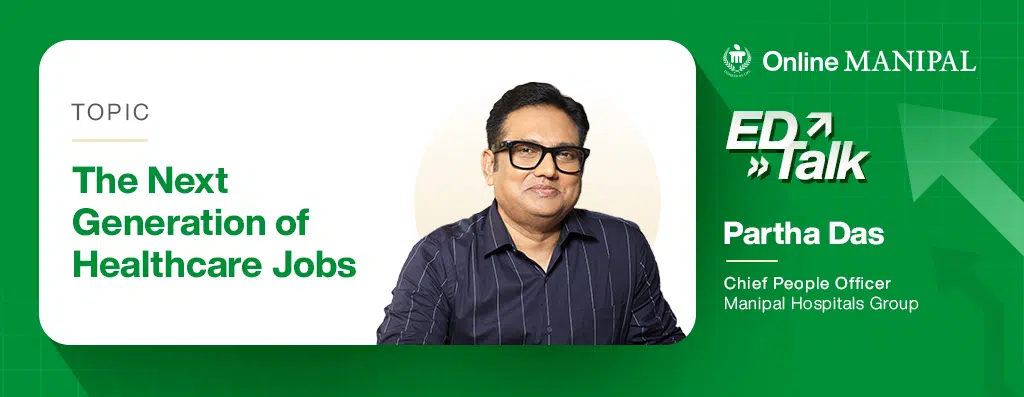
Are you looking for a career that offers immense stability, rapid growth, and the chance to make a tangible impact on society? If your mind immediately jumps to just doctors and nurses, you are only seeing half the picture. The healthcare industry is undergoing a digital and operational revolution, and the most exciting, high-growth opportunities today are often found behind the scenes. This is where the next generation of healthcare jobs is emerging. Roles that combine business acumen, technology, and empathy to keep the whole hospital running.
I have had quite a unique journey in the hospital industry. I remember my early days: I started the HR function in hospitals from scratch, when HR department wasn’t there in hospitals. What I quickly learned is that running a hospital is like running several complex industries inside one building, from hotel administration to a high-tech IT firm, all wrapped around clinical excellence. This complexity is exactly why the managerial and support roles are now critical.
Healthcare Careers & Talent Scarcity
The simple reality is that the demand for skilled professionals across all functions of a hospital is staggering. This isn’t just a stable career; it’s an expanding one with a severe talent scarcity in the market.
- The infrastructure gap: As per World Health Organization (WHO) recommendations, we should aim for approximately 3 beds per 1,000 patients. Unfortunately, we are lagging significantly behind this requirement, which means the market has an insatiable need for new hospital infrastructure and, consequently, new staff.
- Shifting patient expectations: Two decades ago, a hospital revolved entirely around the doctors. Today, the patient is highly informed, knowledgeable, and demanding. They don’t just expect world-class clinical care; they demand an excellent patient experience, meaning a five-star hospitality experience alongside the medical treatment. This requires specialized operational managers focused solely on service delivery.
- Geographic expansion and Tier 2/3 growth: Due to rising incomes and medical advancements, growth isn’t limited to major metros. We see significant expansion into Tier 2 and Tier 3 cities, often managed through a Hub and Spoke model. This need for standardized management across multiple locations creates an ever-growing demand for regional leaders and administrators.
- Evolving disease profile: The rise of non-communicable diseases – diabetes, cardiac issues, cancer, and importantly, mental health – is adding complexity. This requires a much wider range of specialists, from clinicians to administrators who can manage these complex, long-term care programs effectively.
Check this out: From Healthcare to Administrator: How MAHE’s Healthcare MBA Bridges the Gap
The Command Centre: Hospital Operations & MBA in Healthcare Administration
This is where business leaders reside. These professionals are the non-medical administrators who manage everything that is not surgery, patient diagnosis, or treatment. They are the ones with the power to become a P&L Head (Profit and Loss Head) of the entire hospital unit.
| Category | Key Operational Domains |
|---|---|
| Non-Medical Operators | Patient experience |
| Billing and revenue management | |
| Supply chain management | |
| Ancillary Services Manager | |
| Strategic Support Functions | HR |
| Finance & Analytics | |
| Marketing & Patient Outreach | |
| Digital Health & Data Scientists | IoT and Wearable Tech |
| AI and Data Science | |
| Telemedicine and e-Health |
1. The Leaders (Non-Medical Operations)

These roles oversee the day-to-day mechanisms that ensure smooth service delivery from the moment a patient walks in until they are discharged.
- Core Qualification: Typically, a post-graduate degree is essential, often an MBA in Healthcare Administration (MHA).
- Key Domains:
- Patient experience: Managing the front office, help desks, and patient care coordinators—ensuring service quality is top-notch.
- Billing and Revenue management: The critical function that keeps the finances flowing and the hospital profitable.
- Supply chain management: A massive undertaking in a hospital, managing everything from pharmaceuticals to surgical instruments, requiring specialized logistics expertise.
2. The Enablers (Strategic Support Functions)

Even traditional corporate roles take on new meaning and complexity in a hospital setting:
- Human Resources (HR): My own field! Our job isn’t just paperwork; it is about driving culture, recruiting highly specialized talent, and fostering an environment where leaders act as effective HR managers for their own teams responsible for hiring, performance, and upskilling.
- Finance & Analytics: This team doesn’t just tally accounts. They manage the P&L, monitor the profitability of individual medical specialties, and prepare crucial MIS reports. Their job involves heavy analytics to advise leadership on where to invest and which specialties need strategic focus.
- Marketing & Patient outreach: Marketing has moved far beyond the old referral sales model. Patients are researching their options online, making Digital Marketing and branding paramount. This also includes dedicated teams focused on International Marketing or Medical Tourism, attracting patients globally.
3. The Digital Frontiers (Digital Health & Data Scientists)

The future of healthcare is undeniably digital. This is where truly new and innovative roles are being created, requiring tech-savvy professionals, often with a clinical understanding.
- Internet of Things (IoT) and Wearable technology: This is a literal game-changer. We are moving toward a model where patients don’t always need to visit the hospital. Devices like cardiac pacemakers or continuous glucose monitoring patches are managed remotely through mobile apps. This massive shift in data collection requires managers who understand technology integration.
- AI and Data science: We are sitting on an ocean of data. Simple reporting isn’t enough anymore. We need Data Scientists and AI experts right inside the hospital to look at clinical and operational patterns to get powerful, predictive insights. This is the difference between simply reporting what happened and anticipating what will happen.
- Telemedicine and e-Health: Accelerated by the pandemic, Telemedicine and e-pharmacy have become integral parts of the delivery model. Managing the platforms, logistics, and compliance for virtual consultations and medicine delivery is a rapidly growing area that requires specialized operational oversight.
You may like this: Career Prospects after an MBA in Healthcare Management
My Final Advice
Become a business expert. Whether you come from a clinical background, an engineering background, or a pure management stream, the one consistent piece of advice I give is this: You have to understand the business.
When you join a hospital, my suggestion is to thoroughly immerse yourself in the system. Understand the various functions, from the kitchen to the Cath lab, and how the entire ecosystem works. Better exposure to the complexity of the business leads to better opportunities for growth and makes you a better decision-maker.
If the high stakes, rewarding, and technologically advanced administrative side of this industry excites you, the path that leads to becoming a hospital P&L head, then specialized education is your fastest route. The qualification that provides the right blend of business, finance, and operational management tailored for this sector is the MBA in Healthcare Administration or Management. An online MBA in Healthcare Management from Manipal Academy of Higher Education (MAHE) through Online Manipal, for example, is designed to arm you with the specific knowledge to step into these next-generation roles and drive the future of healing.
Lastly, continuous learning is the way to achieve great success in the field. Keeping yourself updated on the newest technologies surrounding healthcare, people management, and most importantly, patient care will take you a long way.
Read this: Reasons to Pursue MBA in Healthcare from SMU
Happy learning!
Become future-ready with our online MBA program