Blogs
Blogs 
Why Everyone Is Switching Careers in Their 20s (And Should You?)

Listen to this blog

A letter to the version of you sitting at a desk, wondering if this is really it.
You’re 24. Maybe 26. Perhaps even 29, close enough to 30 that you can feel it breathing down your neck.
Placed in a good job. A real goldmine with a reasonable salary and a Teams handle. There’s even a coffee mug at your desk that reads ‘Bee-lieve in the grind’. Makes you feel like a busy bee, right? And on paper, everything looks exactly how you want it to be.
And yet.
Something doesn’t still sit quiet, right? This is not the version of life you want in the long run? A Monday dread emotional breakdown happens every Sunday evening? If any of these sound familiar, then it’s time to think about career changes in your 20s.
It is very much possible that you are going through a quarter-life career crisis. Millennials and Gen Z are two of the most highly educated generations. Yet, many are still struggling to find clarity in today’s job market. No longer is the traditional career path the norm, and individuals are returning to universities and colleges to earn degrees that they feel more aligned with their interests and goals.
According to Deloitte’s 2025 Gen Z and Millennial Survey, learning and career growth opportunities are among the top reasons Gen Z professionals choose employers today.
Switching careers in your 20s is increasingly seen as an act of adaptability, self-awareness, and owning your marketability instead of staying stuck in your career. Hence, this guide will be an eye-opener and challenge the traditional myths of switching careers in your 20s. This is not the conventional guide where we give you tips on the benefits of career change in your 20s but a chance to take that decision on career transition for you.
An interesting find: EQ: Your Essential Edge for Career Success
The Map Was Wrong: Why Traditional Career Paths No Longer Work
Here’s the thing nobody tells you when you’re 18 and picking a major: careers don’t actually work the way they used to.
Your parents or grandparents likely picked up a lane like teaching, engineering, medicine, law and stayed on it. The metaphor was a ladder. Straight up. One direction.
But for Gen Z and young millennials, the landscape looks completely different. The fastest growing best careers for Gen Z as per the trends include UX design, content strategy, data storytelling, climate tech, creator economy and many of which barely existed fifteen years ago. Some didn’t exist five years ago. You were handed a map to a city that keeps changing its streets.
So, if you’re experiencing career confusion in your 20s, you’re not confused because something is wrong with you. You might be confused because you’re finally paying attention.
Must read: Impact of Gen Z behavior on higher education
The Signs You Should Change Careers
Let’s talk honestly. Here are the signs you should change careers. Not the dramatic kind, like crying in a bathroom stall (though that counts too), but the quieter, harder-to-name ones:
- Finding passion in other endeavors: You find yourself genuinely energized by the work you do outside of work. The side project, the freelance gig, the thing you do on weekends that doesn’t pay but makes you feel alive.
- Hitting the learning plateau: You’ve stopped growing. Not in a “this week was slow” way, but in a “I already know everything this role will ever teach me” way, and the thought doesn’t make you feel proud but more like you hit the ceiling.
- Longing for another role: You watch people in other fields and feel something uncomfortable that you might quietly call envy, but is actually closer to longing. A signal, if you’re willing to read it.
- Googling Your Way Out: You’ve started Googling things like “is it too late to change careers” at 2am. (It isn’t. Not even close.)
As per new global research by Randstad, Gen Z’s average job stint is 1.1 years – but it’s not job-hopping, it’s growth-hunting.
You feel stuck in your career not because of circumstance, but because staying has started to feel like a choice you’re making every single day and you’re not sure you’re making it consciously.
But Should You Switch?
Here’s the uncomfortable advice to this problem: only you know.
But we will help you in getting to know it yourself. Here are some questions worth sitting with:
Are you running away or running toward? There is a stark difference between resigning from your current job because it is too demanding and leaving it because you have discovered an alternative that aligns with your interests. While the former is escape, the latter is direction.
Have you given your current path a real chance? Maybe at times, the confusion about your careers in your 20s could actually be role confusion. Sometimes it was just the wrong company, the wrong niche, the wrong manager within an industry. So, before you put your career at stake, make sure you are analyzing the right problems and making the right decision.
What’s the cost of not switching? People talk endlessly about the risk of changing. Rarely do they talk about the compounding cost of staying somewhere that slowly drains you. Five more years of feeling stuck in your career is not the “safe” option, rather it just looks that way.
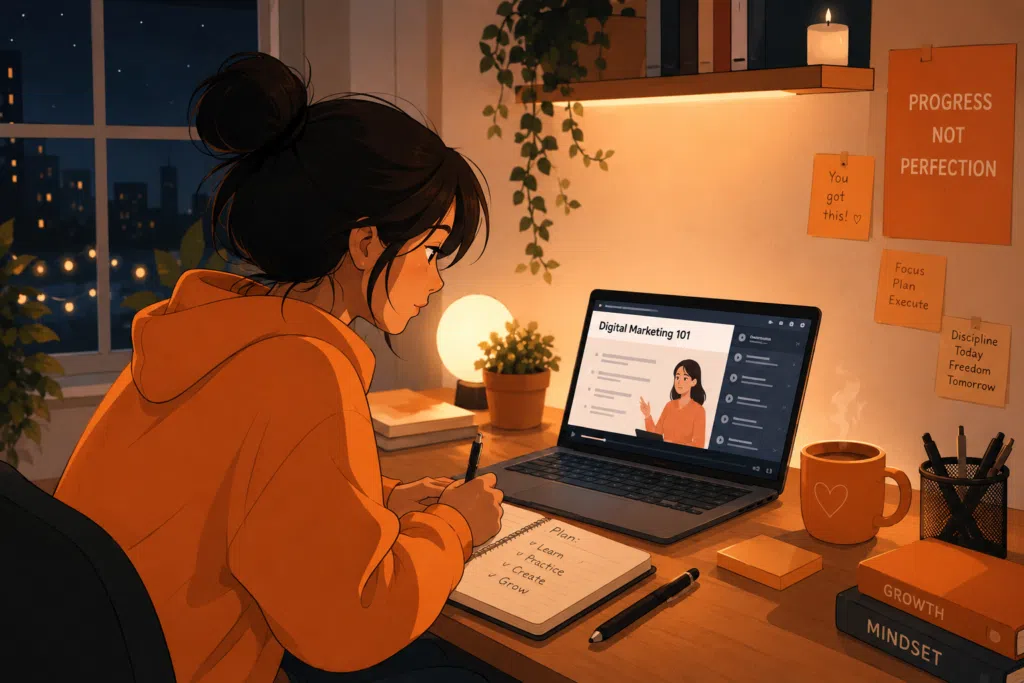
How to Change Careers Successfully
If you’ve decided or you’re deciding on how to take your career forward, here’s what changing careers successfully actually looks like in practice. Not the motivational poster version. The real one.
Start before you leave: The best career transition for young professionals usually happens gradually. Take the course. Do the freelance project. Build the portfolio. Make the move when you have something to move toward, not just something to move away from.
Talk to people who’ve done it: Not for validation, but for information. People who’ve made the switch you’re considering will tell you things that no career article ever will. The realistic timeline. The unexpected hard parts. The surprising good parts.
Shrink the experiment: Take the smaller bet. You don’t need to quit overnight and figure everything out later. Test your new endeavor for three months with low stakes. Take it up as a side project, or like a volunteer role, more like a short course. This way, the data you accumulate will outweigh the amount of overthinking.
Expect the awkward middle. The chances are high that there will be a period (sometimes months, sometimes longer) where you will feel a temporary loss of identity. Don’t believe this discomfort is a mistake. This is how transition feels from the inside.
Deep dive: Engineering to Humanities: Is It a Bad Idea or a Power Move?
The Permission You Didn’t Need (But Maybe Wanted)
A career change in your 20s is not a failure of commitment. It’s not a sign you didn’t try hard enough, or that you were naive, or that you picked wrong at 18 when you were essentially a child who didn’t know anything yet.
It’s a sign that you’re paying attention. That you’re taking your own life seriously. That you’re willing to do the uncomfortable and uncertain work of figuring out who you actually are.
The map was wrong. That’s okay. You’re allowed to draw a new one.
And if you’re still sitting at that desk, mug in hand, wondering, maybe that wondering is exactly where you need to start.
Still figuring it out? So is almost everyone else in their 20s. You’re right on time.
Prepare for your next career milestone with us



Explore Similar Blogs
View All
 30 Sep 2026
 15 mins
 23 Sep 2026
6 mins
23 Sep 2026
6 mins
 31 Aug 2026
9 mins
31 Aug 2026
9 mins
 31 Aug 2026
12 mins
31 Aug 2026
12 mins