Listen to this blog

| 3 Universities | 9+ Skill Categories | #1 is Time Management | 200+ Responses analyzed |
In today’s workplace, a qualification opens the door, but it is soft skills that determine how far you walk through it. Communication, time management, critical thinking, and adaptability are no longer peripheral; they are the core currency of professional growth. Online learning environments, by their very nature, demand these skills from day one.
During convocation events for Online Manipal learners across MAHE, SMU, and MUJ, graduates were asked a single, open-ended question about the skills they developed through their academic journey. What emerged was a revealing picture, one that goes well beyond academic knowledge.
This report presents a structured analysis of those responses: which soft skills were most frequently reported, how they cluster into meaningful categories, and what they suggest about the broader impact of online education.
Also read: The Psychology of Online Learning: What Makes It So Effective?
How This Data Was Collected
| Setting Convocation events across Online Manipal institutions | Participants Graduates from MAHE, SMU, and MUJ online programs |
| Question Asked “What soft skill did you develop during your Online Manipal journey?” | Analysis Responses categorized by theme; frequency counted per category |
Responses were open-ended and self-reported. Similar answers were grouped under common skill categories before frequency counts were calculated. The methodology prioritizes identifying directional trends rather than producing statistically conclusive results.
Three Patterns That Define the Data
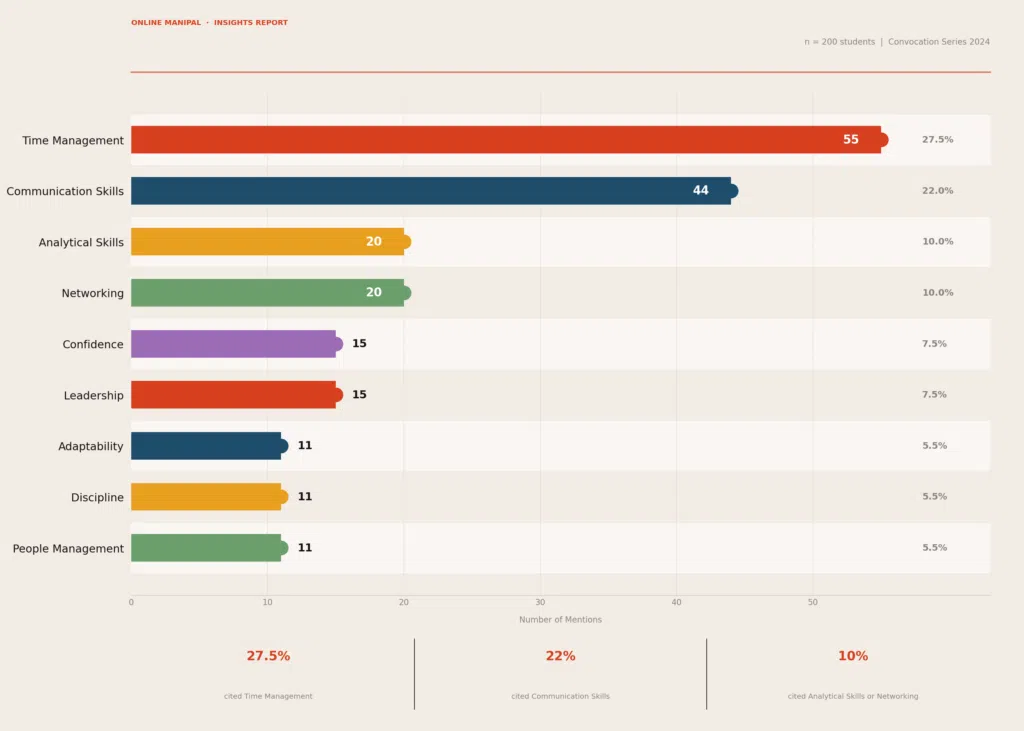
| 27.5% learners cited Time Management — the single most reported skill across all programs |
| 22% learners reported meaningful improvements in Communication Skills |
| 10% each Analytical skills and Networking tied as the next most common responses |
These three patterns suggest that the online learning format itself requires learners to self-schedule, engage digitally, and work through complex course material actively builds the very skills employers most seek.
Most Frequently Reported Soft Skills
Our learners hail from different demographics. Each of our universities caters to a diverse audience, and each of our learners is distinct from the others. This was one of the reasons we set out to understand the philosophy behind how learners are evolving. The common question asked of learners on the day they graduated was: “What are the soft skills they gained through their journey in Online Manipal?” This is one front where we could see a striking similarity in the outcome of their responses.
A Closer Look at Each Skill Group
After close observation, responses have been categorized into four distinct categories. Beyond raw frequency, responses fall into three meaningful clusters, each representing a distinct dimension of professional development.
Self-Management
The skills clubbed under this were:
- Time Management
- Discipline
- Adaptability
- Goal setting
- Increased Focus
- Endurance
The demands of juggling work, family, and academics simultaneously develop rigorous self-organization habits. Time management alone accounted for 55 mentions out of 200 – the single highest response, cited by more than 1 in 4 learners.
Also read: Growing Value of Soft Skills in Today’s Workplace
Communication & Presence
The skills classified under this category were as follows:
- Communication skills
- Presentation
- Public Speaking
- Virtual Representation
- Networking
Virtual discussions, recorded presentations, and asynchronous collaboration require deliberate, precise communication, skills that translate directly into professional environments.
Professional Cognition
The following skills were grouped under this category:
- Analytical Skills
- Problem Solving
- Consulting Mindset
- Financial Management
- Business Management
Students are not only gaining academic qualifications, but they are also developing the professional thinking patterns that employers in competitive industries actively look for.
Personal Development
The skills included under this category were:
- Confidence
- Leadership
- People Management
- Long-term Vision
Independent study over an extended period quietly builds character attributes such as confidence, leadership orientation, and the capacity to think in longer time horizons.
What These Insights Suggest About Online Learning
- Self-management is a primary outcome of online education
When academic schedules are not externally enforced, learners must build their own structure. The prevalence of time management, discipline, and focus on responses suggests that this challenge becomes a growth mechanism.
An interesting find: EQ: Your Essential Edge for Career Success
- Digital environments actively strengthen communication skills
Without in-person interactions, online learners default to writing, presenting, and representing themselves virtually deliberately and consistently. This repeated practice compounds into genuine communication competency.
- Project-based learning develops independent analytical thinking
The frequency of analytical and problem-solving skills in responses aligns with curricula that require learners to apply concepts, not just recall them but in business and case-study contexts.
- Working adults develop professional skills in real time
Many Online Manipal learners are employed while studying. Skills like business management, consulting mindset, and leadership are likely reinforced by applying academic learning directly to their professional environments.
The Degree Was Just the Beginning
The responses gathered at Online Manipal convocation events tell a consistent and encouraging story: online education builds far more than academic knowledge. Skills like time management, communication, analytical thinking, networking, and leadership emerged repeatedly across different universities, different programs, and different learner backgrounds.
For many graduates, the Online Manipal journey contributed not only to their professional qualifications but to a deeper kind of development one that shapes how they think, how they communicate, and how they manage the complexity of modern professional life.
The classroom may have been virtual. The growth, it turns out, was very real.
Prepare for your next career milestone with us