Blogs
Blogs 
The Evolution of Faculty Roles in Online Education

Listen to this blog

According to the report by Research and Markets, “The global e-learning market is set to grow from USD 430.2 billion in 2024 to USD 764.1 billion by 2030”
The above statement emphasizes the unforeseen growth of online learning across the globe. But, with the whole education system that’s changing, the most notable transformation has occurred is with the faculty. Earlier, what used to happen in a traditional setup of classroom teaching is now completely different with online teaching.
So, how exactly is it different? A conversation with Dr Poornima Shetty, Assistant Professor – Senior Scale, Directorate of Online Education at Manipal Academy of Higher Education (MAHE), opened up two stories at once — her experience finding her way around digital tools, and something more personal: her own thinking on what good teaching looks like today.
So, let’s explore how the faculty role has evolved in online education through Dr. Poornima Shetty’s perspective.
From 18 Years of Classroom Teaching to a New Challenge
With 18 years of teaching experience, Dr Poornima’s academic journey began in traditional campus setting, where teaching was deeply interactive and immediate. As time evolved, she understood the growing importance of online teaching and wanted to explore the opportunity.

“My earlier experience was all in campus. Then I wanted to explore this as well. It’s a different ballgame.”
– Dr Poornima Shetty
What started with a simple thought was taken up as a challenge by her. She still remembers how noisy it used to be in a physical classroom whereas in online learning its pin-drop silence!
Every evolution begins with a decision to step into the unknown. In her case, it was her willingness to challenge herself that shaped the rest of her journey.
The Biggest Shift: Teaching Without Seeing the Classroom
Imagine you have been teaching students looking at them, interacting and cracking jokes at times to improve the classroom engagement, for a long time. Suddenly, it’s you with a computer screen, in a closed room without any timely interaction!
This is one of the most powerful differences Dr Poornima highlights, which is the absence of visible student reactions in online learning.
In a physical classroom, faculty naturally rely on non-verbal cues. A student’s smile, raised eyebrows, puzzled look, or even laughter at a joke can instantly tell a teacher whether the class is engaged. These subtle moments help educators adjust their pace, tone, and delivery in real time.
But online learning has changed this completely for her.

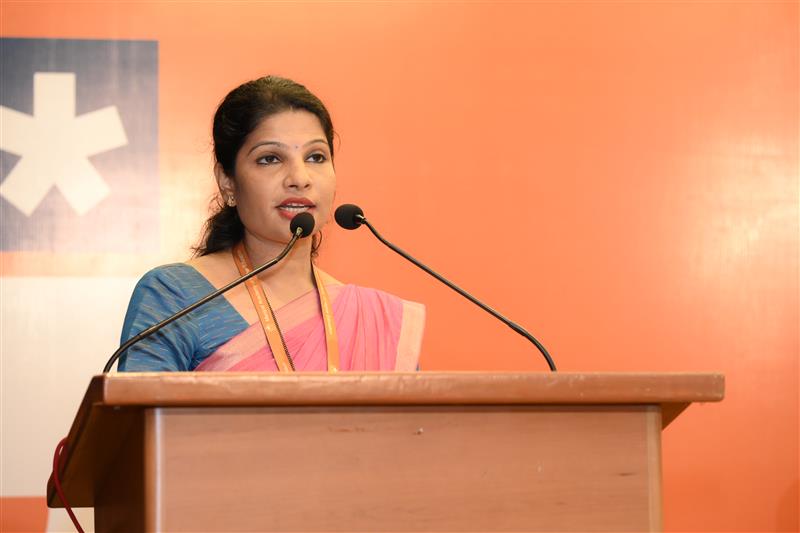
She describes it vividly: “in campus classrooms, you can see your students, interact freely, and even understand their response through their facial expressions. In contrast, online teaching can sometimes feel like “sitting somewhere, staring at the walls, and talking to someone.”
What we don’t notice is how faculty who are known to traditional classroom teaching overcome this situation brilliantly. This emotional shift is central to the evolution of faculty roles.
Faculty recognize that a classroom is no longer defined by physical presence. Building a virtual presence intentionally requires voice, structure, pacing, discussion prompts, and follow-up interactions, tools that faculty gradually incorporate into their teaching.
An Interesting Read: Learner Feedback: A Data-Led Report on Online Manipal’s Learning Experience
Initial Expectations About Online Teaching Vs the Reality
The biggest surprise that the professor felt was teaching across generations; that is, how different the learners’ profiles are compared to what she used to handle!
Unlike traditional campus classrooms, where learners usually belong to the same age bracket, online cohorts bring together students from very different life stages and professional backgrounds. One of the first things that truly surprised her was seeing 60+ old learners learning alongside younger students.
This completely changed her understanding of what an online classroom could be. The classroom was no longer defined by a shared student life stage, but by a shared learning goal.
That shift is powerful because faculty are no longer teaching a single-type learner. Instead, they are teaching students with:
- different levels of work experience
- different expectations from the course
- different motivations for learning
- different ways of engaging with content
Some learners may be early in their careers, while others bring decades of workplace wisdom into discussions.
How Does a Typical Work Week Signify the Evolution of Faculty
Apart from the emotional shift and change of learner profiles, another powerful evolution is how much time they spend on teaching and preparing for the lessons.
In a traditional classroom, a faculty member’s week has a familiar shape — lectures, doubt-solving, maybe some assessment planning. It’s structured, predictable, and largely contained within fixed hours.
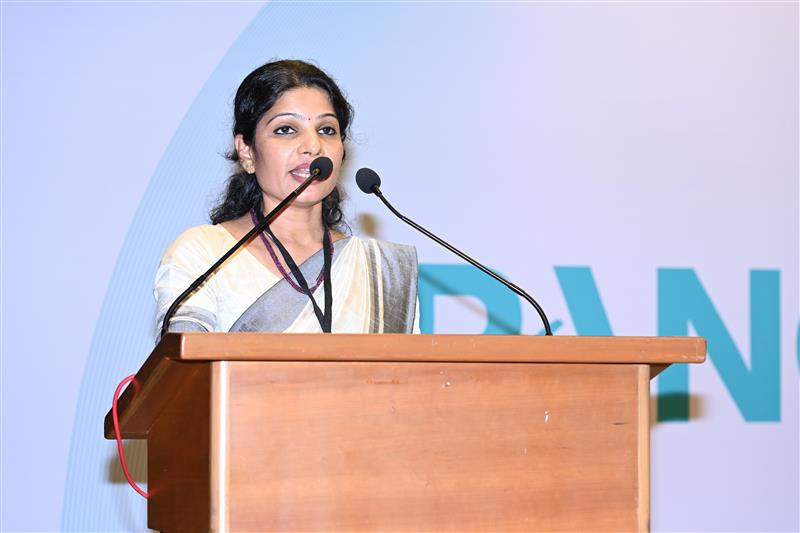
Online education pulls that structure apart. A typical week now includes:
- Planning and organizing live sessions
- Reviewing various forms of learner participation and discussions
- Responding to student inquiries via other channels
- Providing additional resources and examples from the real world
- Giving personalized feedback
- Monitoring learner engagement and performance trends
- Aligning content toward relevance to the industry
This is where you can see how much the role changed and not just moving it online but also growing the role tremendously.
This is where evolution becomes especially visible.
Faculty are no longer just teachers who teach their lessons and leave, but they are also people whose role now is branched to instructor, mentor, facilitator, and academic support guide.
In Dr Poornima Shetty’s experience, this makes online teaching even more interesting because students often bring workplace knowledge into the classroom. So, her week goes beyond teaching theory—it also involves guiding learners on how to apply those ideas in real professional settings.
What Was Done to Increase Student’s Engagement in Online Classes?
It becomes very difficult to increase students’ engagement during online classes. Like Dr Poornima mentioned earlier, the interaction between students and teachers is very low; it’s almost linear.
When we asked her about the initiatives she undertook to make a difference in this grueling environment, she provided some thoughtful responses. Her approach is very structured and practical, as she teaches subjects from the IT field. She usually divides her sessions into two sections:
- First part of the class is devoted to theory and concept building
- The next half of the class is dedicated to practical engagement
This simple shift changes the entire classroom dynamic.
As students begin to apply the concepts they learned in class, the class naturally becomes more interactive. Learners begin to share the challenges they encounter, post images of their challenges, discuss their results, and ask questions that are directly related to what they are creating.
What works here is when students share the positive results, they will get a sense of accomplishment and are motivated to do better. To add on to this step, she is now using ‘Code with Me’ platform for students to upload their code with their execution results.
What started out as a way to foster student participation has turned into a very effective learning loop where peers are learning from each other.
We can see that student engagement moved from attendance-based participation to community-driven learning.
She also makes it a point to keep the mic open for questions whenever she can. It’s a small thing, but it matters as sometimes one student speaking up is all it takes for the rest of the room to feel like they can too.
Of course, it doesn’t always go smoothly. When international students ask questions in languages other than English, she admits it can be a challenge to follow. But, she says, that is exactly the beauty of it. You learn something new every day.
Therefore, it’s a major shift when the faculty are no longer just delivering information. They’re building something slower and more intentional: an environment where learners feel confident enough to speak, connected enough to collaborate, and motivated enough to push each other forward.
Future of Online Education: How Does it Look Like in the Next 5-10 Years?
Having taught across generations for nearly two decades, Poornima firmly believes that the future of education is online.
Her view is informed by a distinct shift in learner behavior. Today’s students prefer flexibility, speed, autonomy, and access to varied learning pathways. Their styles of learning differ from those of the previous generations, and online education aligns naturally with this change.
Dr Poornima says, the “Future is online and I believe it.”
Conclusion
Dr Poornima Shetty didn’t just adapt to online education; she grew with it. Her journey reflects what this shift has really asked faculty everywhere: not just to show up differently, but to think differently about what teaching is for. The classroom may have moved online, but the commitment to the learner hasn’t gone anywhere.
Reference
https://www.researchandmarkets.com/reports/2832322/e-learning-global-strategic-business-report
Prepare for your next career milestone with us



Explore Similar Blogs
View All
 25 Sep 2026
 7 mins
 23 Sep 2026
6 mins
23 Sep 2026
6 mins
 20 Aug 2026
10 mins
20 Aug 2026
10 mins
 19 Aug 2026
10 mins
19 Aug 2026
10 mins