Blogs

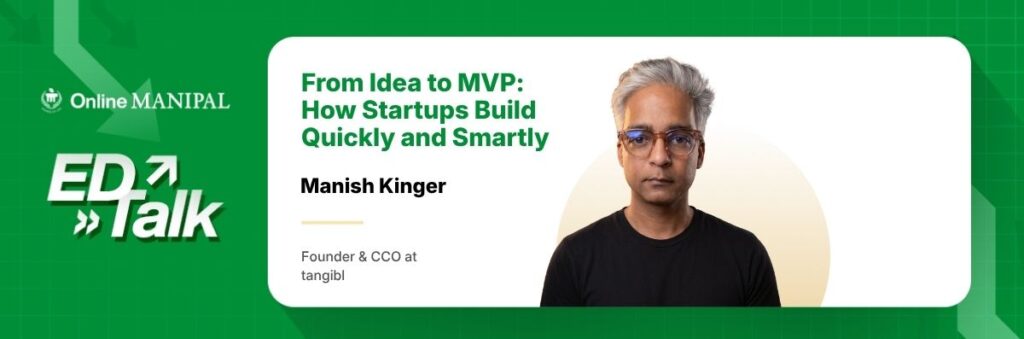
Build Angry: Turn Ideas into Action
Listen to this blog

A great idea doesn’t need months of planning before it sees the light of day. Sometimes, it needs something much simpler: a strong enough feeling that makes you say, “I need to do something about this.” That’s how I approach creation.
For me, the best ideas often begin with irritation, dissatisfaction or what I call an “ick”. Something doesn’t feel right. It keeps bothering you. You keep thinking about it. Eventually, that feeling becomes difficult to ignore. That’s where creation begins.
Over the years, I’ve learned that you don’t always need a perfect business plan, a large team, or endless brainstorming sessions to build a product. You need to identify the problem that genuinely bothers you, find the smallest possible proof, and build it before the feeling disappears.
Start with the Problem That Bothers You
I’ve always been a person who complains. It’s probably one of the most honest things I can say about myself. Earlier in my career, I worked across advertising agencies and spent years building brands. One thing that consistently irritated me was advertising that looked impressive but didn’t actually move the business forward. I cared less about awards and more about whether the work made a difference.
For example, I worked with Max Protein for several years. About a year and a half ago, the brand crossed ₹100 crore in annual revenue for the first time. The silver coin I received from the CEO to mark that achievement meant more to me than many awards I had received. That experience reinforced something I already believed: good creative work should do a job. So, when I saw the growing use of AI to create advertising without enough thought behind it, it bothered me. A lot. I started writing about it on LinkedIn. I wrote almost every day, sometimes more than once, depending on what irritated me enough. That irritation eventually became something bigger.
Turn Your “Ick” Into a Business Idea
When you complain about something repeatedly, it can become an itch that you can’t switch off. For me, that itch was poor use of AI in creativity. But there was an important question behind it: Could I turn this feeling into something tangible? I realized that my mode of expression has always been creation. If something bothers me, I want to put it into some physical form.
That became the starting point for the Slot Machine. Slot Machine is a tool where you can enter a logo and category, adjust a level and instantly generate a logo, tagline or brand idea. I created it as a way to express my frustration with the way AI was being used in creativity. But something interesting happened. The product became more than an expression of my frustration. It became a business development tool for tangibl. People who used Slot Machine could also discover my organization, and I received enquiries through it. The lesson was simple: a personal problem can become a business opportunity when other people feel the same problem.
Read more: Startup vs corporate: What’s best for your career?
Look for an Audience Before You Build
Your personal frustration matters, but it isn’t enough by itself. You also need to ask whether other people experience the same thing. When I started speaking openly about AI and advertising, I saw people responding to those ideas. They liked, commented, and engaged with what I was saying. That gave me an important signal. There was an audience.
I have seen this pattern in other businesses too. A founder notices something that doesn’t feel right and builds a product around fixing it. The important part is that the problem feels real to the person creating the solution. You can’t simply borrow somebody else’s frustration because you think there might be a market for it. If you strongly believe in the problem, your creative energy comes naturally. You don’t have to force yourself to keep going. That personal connection can also make the product more original.
Don’t Wait for the Perfect Moment
One of the biggest lessons I learned as a solo founder is that feelings have a shelf life. I remember thinking about one of the tools I eventually created on a Friday night. I spent four or five hours working on it. By Monday, the tool was ready. It happened within roughly 22 hours. If I had waited, discussed it with too many people or postponed it for later, the feeling would probably have disappeared.
That’s why I believe timing matters when building an MVP. When you feel strongly about an idea, capture it quickly. Put it on paper. Build something small. Get it out. You can improve it later.
An interesting read: From ₹1,000 to a Digital Agency at 21: Mansi Hirani’s Journey
Build First, Perfect Later
I’ve always believed that finishers are greater than thinkers. That doesn’t mean thinking has no value. It means thinking endlessly without creating anything doesn’t get you closer to proof. When I get into a creative zone, I don’t try to make the first version perfect. I try to finish it.
Finish first. Edit later.
This approach also changes how you think about an MVP. The goal isn’t to create the final version of your product. The goal is to create something that can give you evidence. For me, that evidence was a website.
My MVP Was Really a Minimum Viable Proof
tangibl had lived in my head for two or three years. I knew I wanted to build a company around measurability because I felt advertising often became too focused on intangible ideas. Eventually, I stopped thinking about it and started building. I put pen to paper and decided to create a website.
Within one week, I worked on the logo, looked at my previous work, developed the mathematics behind what I wanted to measure, and built case studies around it. I created a website from zero. That website became my MVP. But I prefer to call it minimum viable proof.
The question wasn’t, “Is this the perfect business?” The question was, “What is the smallest proof I can put on the table?” Once I had that proof, something changed. I knew what to do next. I knew whom to pitch. I knew which calls to make. I could start thinking about how to scale the organization. The physical evidence gave me clarity.
Use a Simple Filter Before You Build
I use what I call the S.H.I.T principle to filter ideas. Four questions, sixty seconds, then build it or drop it:
- Stings (The Feeling Test): Staying quiet about it makes you uncomfortable. If you can shrug, you can skip it.
- Honest (The Origin Test): It is your opinion, not a market gap you read about in somebody’s newsletter.
- Immediate (The Start Test): You can start tonight with what you already have. No funding, no cofounder, no permission.
- Tiny (The Scope Test): It ships on a weekend, or it does not ship. Scope is the only thing you control.
This is the test I use when deciding whether to act. You may not be able to build the complete product immediately. That’s fine. Maybe you can build a website. Maybe you can create a simple tool. Maybe you can create a basic version that demonstrates the idea. Find the smallest possible proof.
Don’t Let Permission Become the Bottleneck
I also spent several months delaying the decision to start tangibl. I spoke to people. I explored partnerships. I considered learning new skills. I asked friends, former colleagues and former bosses what they thought. Everyone was supportive. But I was still waiting for a signal.
Looking back, I consider those six months a tax I paid for seeking permission from the world. As a solo creator, I’ve learned that you sometimes need to remove that dependence. You need to become comfortable creating on your own. That’s an important skill today. AI can help, tools can help, but the responsibility to create still sits with you.
Build the Proof, Then Build the Community
When asked whether you should build a community first or create an MVP first, my answer is straightforward: build first. There is one important caveat. You should still validate your gut. Don’t blindly follow an instinct. Ask yourself whether you can make that instinct a little more mathematical. But once you see that there is a world around the problem, create. Build the first version. Put something real in front of people. Then use the response to shape what comes next. That’s how an idea starts becoming a product.
You may like to read: Aswin Menon’s Journey with an Online MBA in Finance
The Real Skill Is Starting
Building an MVP isn’t always about having more resources. Sometimes it’s about reducing the distance between an idea and its first proof. For me, creation has always come from a strong feeling. That feeling could be anger, frustration or dissatisfaction. I don’t try to suppress it. I try to channel it.
So, if something keeps bothering you, don’t dismiss it too quickly. Ask yourself what it is trying to tell you. Maybe there is a problem hiding inside it. Maybe there is an audience experiencing the same thing. And maybe there is a product waiting to be built.
Start small. Build angry. Then let the proof tell you where to go next. – Manish Kinger
For aspiring entrepreneurs and business leaders, this mindset connects closely with the practical thinking encouraged through Online Manipal’s MBA program, where understanding business problems and turning ideas into actionable solutions can become part of a broader management journey. The starting point, however, remains the same: identify the problem, build the smallest possible proof and learn from what happens next.
Prepare for your next career milestone with us



Explore Similar Blogs
View All
 11 Sep 2026
 8 mins
 08 Sep 2026
6 mins
 07 Sep 2026
6 mins
 12 Aug 2026
11 mins