Listen to this blog

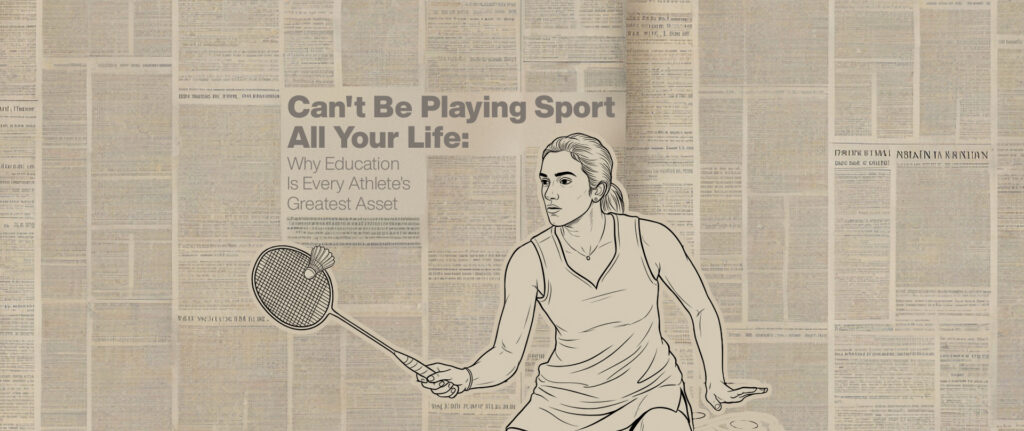
You can’t be playing sport when you’re 45 or 50 or 60 at the highest level,” PV Sindhu said. “And that’s the truth.”
When two-time Olympic medalist, PV Sindhu, stands up and tells aspiring athletes to take their education seriously, the world would do well to listen. At a recent event in Gurugram, the Indian badminton star issued a candid warning: ignoring academics in favor of a sporting career is simply too risky.
It is a truth that many young athletes, caught up in the excitement of competition and the dream of glory, find it easy to push aside. But Sindhu’s words, which were spoken from personal experience at the very summit of world sport, carry a weight that deserves serious attention.
The Clock Is Always Ticking
Professional sporting careers are among the shortest professions. Most athletes peak somewhere between their mid-twenties to mid-thirties. By the time their peers are hitting their stride in conventional careers, many athletes are already facing retirement. And that is assuming everything goes according to plan.
It rarely does. Sindhu herself battled a stress fracture of the left foot before the 2016 Rio Olympics; a stark reminder of how suddenly and cruelly a career can be interrupted. Injuries, declining form, or simply the passage of time can bring even the most decorated career to an abrupt end. The athlete who has invested everything in sport and nothing in education is left with very little to fall back on.
This is not a reason to abandon sporting ambitions. It is a reason to build something alongside them.
An interesting read: Continue your education after a long break to climb the career ladder
What Education Gives You That Sports Cannot
Sindhu put it simply: “Education will always be lifelong with you, and that will always stay with you.” A degree does not expire. It cannot be injured. It does not decline with age. The knowledge and skills built through academic study grow and compound over a lifetime in ways that physical performance simply cannot.
Beyond long-term security, education equips athletes with capabilities that serve them in every arena. Critical thinking sharpens decision-making. Communication skills open doors in media, management, and business. Financial literacy prevents the wealth earned during a short sporting career from disappearing just as quickly. And qualifications provide credibility in post-sport careers whether that is coaching, sports management, broadcasting, entrepreneurship, or any number of other fields.
Sindhu completed her MBA while competing at the international level. She does not pretend it was easy. “I know it’s not easy,” she acknowledged. “You go to training in the morning, come back, study, and then you go for evening sessions.” But she did it, and she is clear that it was worth it.
Dive in: 8 reasons to consider an online degree this academic year
The Real Challenge of Doing Both
Balancing elite sports and serious academic study is genuinely hard. A competitive athlete’s day is already packed with early morning training, school or college, afternoon sessions, physiotherapy, recovery, nutrition, and video analysis. Somewhere in the margins, there is supposed to be coursework.
Tournament travel compounds the problem. A national-level player can miss weeks of classes in a single semester. Examinations fall during the competition season. The mental energy that academic study demands is the same cognitive resource that physical training depletes.
And yet, the qualities that make great athletes also make great students. Discipline, resilience, the ability to set long-term goals and work towards them systematically, the capacity to perform under pressure – these are not just sporting virtues. They translate powerfully into the classroom and the lecture hall. Many athletes who commit to their education find that the habits built on the training ground serve them just as well in their studies.
The challenge is real, but it is far from insurmountable.
Worth a read: Game, Set, Match, Degree: Tennis Champion Amodini Naik’s Quest for Excellence
How Online Learning Has Changed the Equation
For much of sporting history, the conflict between education and competition was almost impossible to resolve practically. Traditional universities demanded physical presence, fixed timetables, and regular attendance which made conditions fundamentally incompatible with the life of a competitive athlete. The choice of sports or education was stark and unfair.
Online learning has changed that. With innovative learning management systems, it allows athletes to study on their own schedule by watching lectures after evening training sessions, completing assignments from hotel rooms between tournaments, sitting examinations remotely from training camps. The geographical rigidities and timetable conflicts that once made university study nearly impossible for serious athletes have been largely removed.
Must read: Importance of advanced LMS for successful online learning
This flexibility is not a small convenience. It is genuinely transformative. An athlete preparing for a major championship no longer has to choose between their sporting preparation and their academic progress. Both can advance simultaneously, each reinforcing the other.
Online education also offers courses in business, sports science, marketing, and management, many of them directly relevant to a future career in or around sport. Athletes can build credentials that will serve them well whenever their competitive career concludes, without ever having to step away from the sport they love.
You may like to read: The Business Behind the Ball: What FIFA World Cup 2026 Sponsors Reveal About Modern Marketing
Preparing for the Life That Comes After
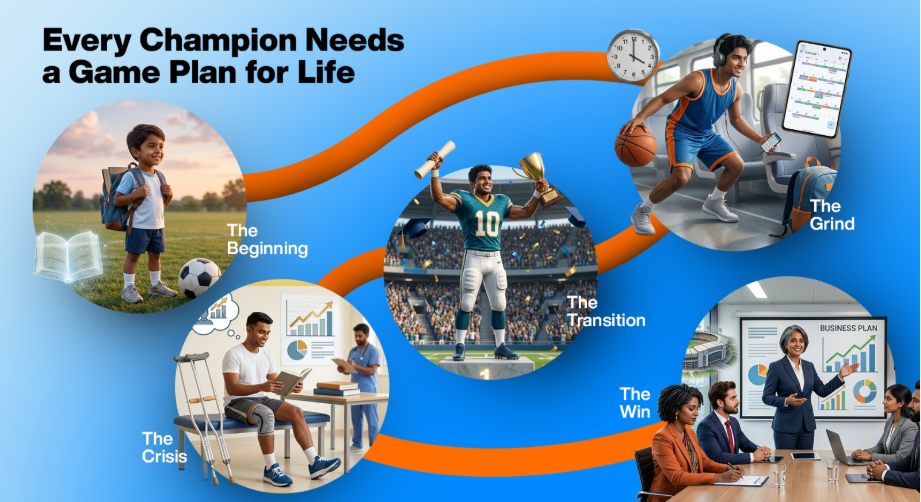
The end of a sporting career is not the end of a life, but it can feel that way for athletes who have built their entire identity around competition. The transition is one of the most psychologically challenging experiences any elite performer faces. Structure, purpose, and clear metrics of success all disappear at once.
Education is one of the most powerful buffers against that shock. The athlete who has been building academic credentials alongside their sporting career does not face retirement as a cliff edge. They face it as a transition, a shift of emphasis, not an ending. The skills developed through sport combine with the knowledge gained through study to create a genuinely formidable foundation for whatever comes next.
Check this out: Online Manipal: Providing incredible learning opportunities for learners from all walks of life!
The Winning Combination
Sindhu’s message was not anti-sport. It was a pro-athlete. “Sport is also important,” she acknowledged, “but not that, completely stop your studies.” It is a both-and message, not an either-or one.
A sporting career may be glorious, but it is temporary. Education is permanent. And with flexible online learning making it more accessible than ever, athletes today have fewer excuses and more opportunities than any generation before them.
The best strategy has always been the same: not sport or education, but sport and education, together, from the very beginning.
Prepare for your next career milestone with us