Listen to this blog

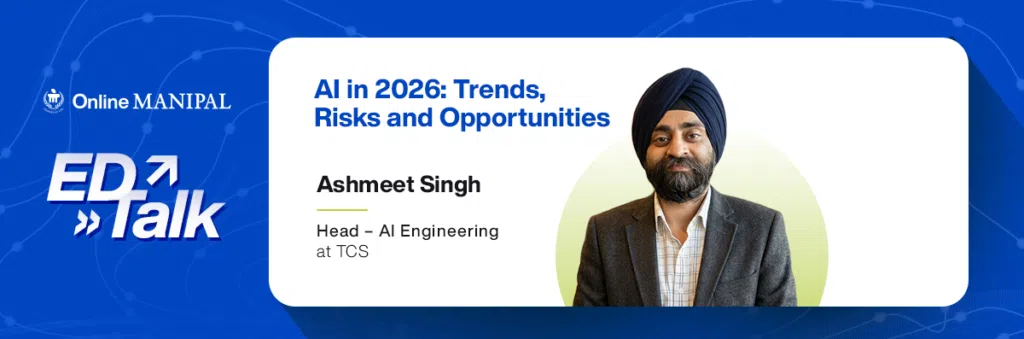
The landscape of technology is shifting faster than most of us can track. For many, artificial intelligence still feels like a simple chatbot experience, something you use to draft an email or ask a quick question. But as someone who has spent over 16 years in enterprise technology and digital transformation, I can tell you that what we are witnessing in 2026 is far more than just a “hype cycle.” We have moved from rule-based systems to something truly autonomous, and the implications for our careers and industries are profound.
Why 2026 is the Year of Autonomous AI
When I look back at the journey of AI, the evolution is staggering. In 2010, we were clicking through rule-based menus on banking sites. By 2018, we saw the rise of recommendation engines on platforms like Netflix and YouTube, where the system learned our patterns to suggest what we might like next. These were “assistive” technologies – they helped us find things, but they didn’t “do” things for us.
But 2026 feels fundamentally different because AI is no longer just an “assist” solution; it has become autonomous. We have transitioned from Generative AI, which creates text and images, to Agentic AI.
- Planning and Execution: Modern AI agents can now understand a high-level goal, plan the necessary steps, and execute them across multiple applications without a human holding their hand at every click.
- Beyond Chatbots: Unlike the simple bots of the past, these agents don’t just talk; they take action. They have “agency.”
- The Rise of Agentic AI: This is the shift into AI becoming a core team member within organizations. It is moving beyond simple user-facing interfaces to handling complex, multi-step internal workflows that previously required entire departments to manage.
Read more: Learning as a Lifestyle: Why 2026 is the Year of Skill-First Education
The Power of AI Agents in Action
To understand the practical shift, I often look at how service desks have changed. I remember the days when you would call a service provider—like Airtel or Jio—and a human would search a database to find a solution for you. Even early AI only pointed you to an FAQ page. Today, the workflow is being handled by AI agents that manage the entire lifecycle of a problem.
- Breaking Down Problems: When a user reports an issue, the agent doesn’t just look for a keyword. It breaks the problem into a logical sequence of actionable tasks.
- Autonomous Action: For example, if a critical server is down, the agent can identify the failure, cross-reference it with recent updates, request necessary approvals from stakeholders via email, and restart the server itself.
- Continuous Monitoring: After taking action, the agent doesn’t just close the ticket. It pings the system repeatedly to ensure the problem is truly resolved and then sends a natural-language summary to the IT manager.
I’ve seen this firsthand in my work with global organizations. We aren’t just building tools anymore; we are building digital colleagues that can handle the “heavy lifting” of technical maintenance, allowing human experts to focus on high-level architecture and strategy.
Navigating Risks and Responsible AI
With this incredible power comes significant risk. I recently attended a summit where I saw youngsters building incredible prototypes and industry-level solutions. It was inspiring to see the speed of innovation, but it also highlighted a major challenge: many people are using AI without understanding what “Responsible AI” means in a corporate environment.
- The Control Layer: If an AI agent isn’t properly governed, it could reboot the wrong server or take an action that puts an entire organization at risk. We must build “guardrails” into the code to ensure the AI knows its limits.
- Blind Following: A common mistake I see new learners make is blindly following whatever a platform tells them. If a model gives you a confident answer, your first instinct should be to verify it, not copy-paste it.
- Enterprise Risk: If you don’t use these tools responsibly, you risk compromising your company’s data and security. In 2026, data privacy isn’t just a legal requirement; it’s a competitive necessity.
More on this: Can Online Education Stay Relevant in an AI-Driven Job Market?
I often tell my teams that even if you aren’t a “tech person” in the traditional sense, you can still do wonders with this technology by utilizing low-code or no-code solutions. However, you must prioritize your analytical ability. You need to understand what is happening “under the hood” to ensure the output is safe and accurate.
The Evolution of the Professional Skillset
In the past, having “IT skills” meant knowing how to code in a specific language. Today, the most valuable skill is “AI Orchestration.” This means knowing how to connect different AI models, set up the right agents, and—most importantly—how to ask the right questions.
I’ve seen professionals from non-technical backgrounds dominate this space because they have deep domain expertise. They understand the business problem better than the coder does. When you combine that domain knowledge with an understanding of AI’s capabilities, you become indispensable.
My advice to anyone starting out or looking to pivot is this: Don’t just learn the “how” of a tool; learn the “why.” Understand the logic of how these systems plan and reason. This mindset shift is what separates those who are replaced by AI from those who lead AI initiatives.
My Advice for Your Career Journey
As a professional working in an IT company that collaborates closely with global clients, I want to emphasize that your learning must evolve alongside the technology. Don’t view AI as a threat to your job; view it as a shift in how work is done. The roles that existed five years ago are changing, but they are being replaced by roles that are more creative and less repetitive.
The key is to build a practical learning roadmap that you can act on immediately. Focus on developing your analytical skills so you can manage these autonomous systems rather than just using them as a search engine. The goal is to move from being an end-user to being someone who can design and deploy these solutions at scale.
Dive in: Why Is AI Literacy Essential for a Future-Ready Workforce?
Conclusion
The future of AI in 2026 is about more than just smarter conversation; it is about autonomous systems that can think, plan, and act. By staying curious and focusing on responsible implementation, you can position yourself at the forefront of this digital transformation. We are in a period of “continuous learning,” where the certificate you earned yesterday is the foundation for the skill you must learn today.
If you are looking to deepen your understanding of these emerging technologies and how they impact business strategy, exploring the specialized programs at Online Manipal can be a powerful next step in your professional journey. Whether you are interested in data-driven decision-making, MBA programs that incorporate modern tech, or enterprise innovation, staying ahead of the curve is the only way to thrive in this new era.
The tools are here; the question is, how will you choose to lead with them?
Prepare for your next career milestone with us