Listen to this blog

A lot of people think the creator economy is about going viral. They see a creator gain thousands of followers overnight, land brand deals, and build an audience at scale. It looks exciting, and honestly, it is. But after spending years creating content and working with digital platforms, I have learned that virality is rarely the thing that creates long-term success.
Trust does.
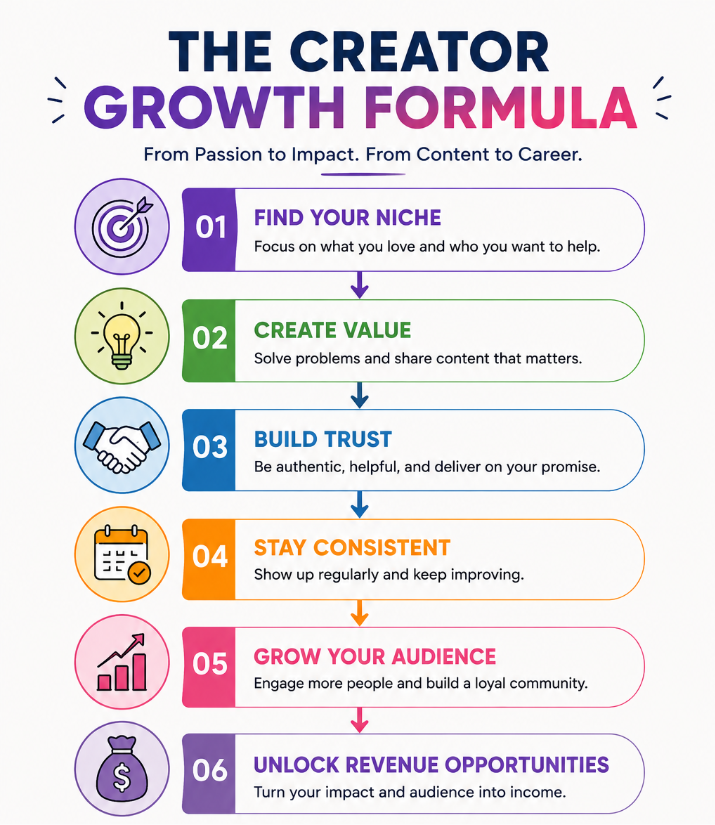
Whether you are a student, a working professional, a gamer, a teacher, or someone with a passion for a specific subject, the creator economy offers opportunities that did not exist a decade ago. The barrier to entry is lower than ever. The tools are more accessible than ever. Yet the fundamentals remain the same. Find your niche. Create value. Stay consistent. Those three principles are what separate creators who last from creators who disappear after a few months.
What Is the Creator Economy Really About?
Many people assume the creator economy is limited to influencers with millions of followers. In reality, it is much broader. The creator economy is built around individuals who create content, build communities, and share knowledge, entertainment, experiences, or expertise online. The most successful creators are not necessarily the loudest. They are often the ones who build a genuine connection with a specific audience.
I have seen creators succeed in areas such as:
- Education and teaching
- Gaming and live streaming
- Technology and coding
- Finance and business
- Travel and lifestyle
- Sports and entertainment
- History and culture
The key is not choosing the biggest category. The key is choosing something you genuinely care about.
For example, I enjoy teaching. That naturally became the foundation for the content I create. Someone else may be passionate about gaming, while another person may enjoy explaining historical events. The niche looks different for everyone.
Why Finding Your Niche Matters
One of the most common questions I hear is, “How do I find my niche?” My answer is simple: start with what you already enjoy. Look around you. Think about the subjects you naturally spend time on. Think about what people ask you for help with. Think about what you could talk about for hours without getting bored. Your niche does not have to be perfect from day one. In fact, many creators discover their niche while creating content.
A student studying history could create short videos explaining fascinating historical periods. A gamer could start streaming gameplay sessions. A professional could share industry insights and lessons learned at work. The goal is to start. Waiting for the perfect niche often delays progress far more than choosing the wrong one.
You may be interested in: MBA in Marketing or MBA in Digital Marketing: Which Should You Pursue?
Trust Is the Most Valuable Asset
If there is one lesson every creator should remember, it is this: Trust is the real currency of the creator economy. Followers can come and go, views fluctuate, algorithms change, but trust remains. When people trust your content, they come back. They recommend you to others. They engage with your posts. They support your work.
That trust eventually creates opportunities such as:
- Brand partnerships
- Sponsorships
- Membership programs
- Affiliate collaborations
- Courses and digital products
But trust cannot be built overnight. It is earned through consistency. If you recommend products you do not believe in or create content purely for quick gains, people notice. Audiences are smarter than ever. The creators who succeed over time are the ones who protect their credibility.
Consistency Beats Virality
Many aspiring creators focus heavily on growth hacks and viral strategies. While visibility matters, consistency matters more. I often describe it as a simple formula:
Value × Consistency = Growth
A single viral post might bring attention for a day. Consistent content creates momentum for years. The challenge is that consistency can feel overwhelming. Creating content regularly requires time, planning, editing, research, and production. That is where modern tools can make a difference. Not by replacing creativity, but by reducing friction.
How AI Is Changing Content Creation
One of the biggest shifts happening today is the role of AI in content creation. Many people worry that AI will replace creators. I see it differently. AI helps creators spend less time on repetitive tasks and more time on creating value. Today, creators can use AI tools to:
- Research topics faster
- Generate content outlines
- Create first drafts of scripts
- Organize information
- Generate visuals and B-roll concepts
- Repurpose long-form content into short-form formats
- Create summaries and learning materials
Tools such as ChatGPT, Gemini, Claude, Google Flow AI, and NotebookLM make many of these tasks significantly easier. What is important to remember is that the idea still belongs to the creator. AI can accelerate execution, but it cannot replace your perspective, experiences, or creativity. The niche is yours, the voice is yours, and the trust is yours. AI simply helps you move faster.
An interesting read: 9 Side Hustle Ideas Students Can Start While Studying
Understanding Creator Revenue Streams
Another common misconception is that creators earn money only through platform advertisements. In reality, creator income is often diversified. Some of the most common revenue streams include:
1. Brand Sponsorships
Brands partner with creators who have built trust with a specific audience. For many creators, sponsorships become a significant source of revenue because brands value authentic recommendations.
2. Membership Communities
Platforms offer membership programs where followers can access exclusive content and benefits. This allows creators to build stronger relationships with their most engaged audience members.
3. Platform Revenue
Advertising revenue from platforms such as YouTube can provide another income stream, particularly for creators producing long-form content.
4. Courses and Digital Products
Creators who build expertise and credibility often package their knowledge into courses, guides, templates, or other digital offerings.
5. Affiliate Partnerships
Affiliate programs allow creators to recommend products they genuinely use and earn commissions when purchases are made through their referral links. The important thing is that these opportunities usually emerge after trust has already been established. Monetization is often the result of credibility, not the starting point.
<quote> Build trust. Stay consistent. Create value. Everything else follows.
Don’t Limit Yourself to One Platform
Many creators focus exclusively on one platform and become discouraged when growth slows. A better approach is to think in terms of an ecosystem. Different platforms serve different purposes, for example:
- YouTube can support long-form content.
- Instagram can help with short-form discovery.
- LinkedIn can help build professional credibility.
- X and Threads can strengthen community engagement.
- Streaming platforms can support real-time interaction.
Using multiple platforms allows creators to reach audiences in different ways while reducing dependence on a single algorithm. The goal is not to be everywhere. The goal is to create meaningful touchpoints where your audience already spends time.
The Opportunity Ahead
The creator economy is no longer reserved for influencers or celebrities. Today, anyone with knowledge, passion, and consistency can build an audience. You do not need expensive equipment to start. You do not need a large team. You do not even need thousands of followers. You need a topic you care about, a willingness to create, and the patience to build trust over time.
Prepare for your next career milestone with us