Listen to this blog

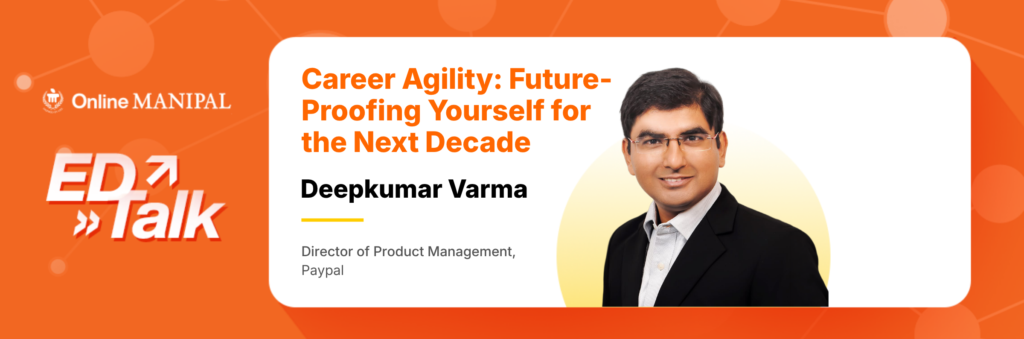
In the fast-paced world of technology and business, looking ten years into the future can feel like trying to see through a thick fog. But as someone who has spent over 18 years in the industry, I’ve seen how quickly the landscape shifts. Just recently, we’ve seen headlines about massive layoffs at major firms like Oracle, affecting tens of thousands of people. These aren’t just isolated incidents; they are signals that organizations are constantly evolving, seeking higher efficiency and entirely new skill sets.
The question isn’t whether change is coming, but how you will respond to it. To remain relevant, we must move beyond static job descriptions and embrace career agility. I want to share the core principles I’ve used to future-proof my own path and how you can apply them to thrive in an AI-driven world.
The Shift from “Know-it-all” to “Learn-it-all”
When I started my career nearly two decades ago, success was defined by deep, specialized knowledge. If you mastered a specific programming language like Java or understood a particular database inside and out, you were set. Today, that model is broken. The sheer volume of information being generated means that no one can know everything.
I often think back to my early days as a developer. I used to think that reading the right books would give me all the answers. Now, I realize that the most valuable skill isn’t what I already know – it’s how fast I can learn the next thing. We have moved from being “know-it-all” to “learn-it-all.”
Another interesting read: What Skills Do Employers Look for in FinTech Professionals?
How to cultivate a “Learn-it-all” mindset:
- Acknowledge the “unknown unknowns”: Don’t be intimidated by what you don’t know.
- Peel the onion: When faced with a complex new project, methodically uncover information layer by layer.
- Investigative curiosity: When someone asks for a new feature or “search box,” always step back and ask why. Investigate what worked and what didn’t in the past.
- Move beyond books: Understand that static knowledge is outdated the moment it’s published; focus on the ability to pick up new tech on the fly.
Building AI Fluency and Technical Savviness
There is a lot of anxiety surrounding AI, but I like to use a sports analogy to put it into perspective. Think of the evolution of cricket. When the T20 format was introduced, the core skills of the game didn’t disappear, but the way players applied them had to change drastically.
| The Traditional Era | The AI/T20 Era |
|---|---|
| Focus on manual execution and repetition | Focus on strategy and creative direction |
| Success through specialized “hard” skills | Success through technical agility and tool mastery |
| Human as the primary “doer” | Human as the “orchestrator” of AI tools |
| Slow, methodical output | Rapid, AI-augmented output |
AI is the “T20” of our professional lives. It won’t necessarily take your job, but a person who knows how to use AI likely will. Technology is excellent at handling the “run-of-the-mill,” repetitive tasks. By building AI fluency, you aren’t replacing yourself; you are liberating yourself to focus on high-level strategy.
Embracing a Growth Mindset in a Changing Landscape
A growth mindset is about the willingness to reinvent yourself as team structures and company goals shift. I’ve seen this firsthand: you might go from managing a large internal team to managing a hybrid group of direct reports, external vendors, and AI-driven processes.
You may find this interesting: 9 Side Hustle Ideas Students Can Start While Studying
Key Traits of Career Agility:
- Adaptability: Being comfortable with a fast-moving pace and shifting responsibilities.
- Openness to Change: Not resisting new team structures or management styles.
- Proactive Problem Solving: Looking for ways to improve processes before being asked.
- Resilience: Seeing organizational shifts as opportunities for growth rather than threats.
Strengthening the “Human” Core
As machines get better at being machines, we have to get better at being humans. The technical “hard skills” of today will be the automated tasks of tomorrow. What remains are the human-centric skills that AI cannot replicate.
The “Human-Centric” Skill Stack:
- Strategic Ownership: Taking responsibility for the “big picture” and final outcomes.
- Collaboration: Driving synergy between human teams and digital tools.
- Empathy & Intuition: Understanding organizational culture and complex stakeholder emotions.
- Curation: Using human judgment to ensure AI-generated output is relevant and resonates with real people.
I often tell my teams that their goal should be to “up-level” their roles. If a machine can do the tactical work, our job is to ensure all the pieces of the puzzle fit together perfectly.
Read more: Design Thinking for Modern Problem Solvers – Online Manipal
Proactivity: The Engine of Career Agility
The most dangerous thing you can do for your career right now is to wait. In a decade characterized by rapid change, waiting is a recipe for obsolescence. You have to be proactive in generating impact.
One strategy I’ve always used is the “Proof of Concept” (POC) approach:
- Don’t wait for permission: If you see a way to improve a process, build a small pilot.
- Test and gather data: Use a new tool or strategy on a small scale first.
- Show, don’t just tell: Present the results of your pilot to leadership.
- Exceed expectations: Deliver results people weren’t even expecting to make yourself indispensable.
Cultivating Long-Term Optimism
Finally, it takes a certain level of optimism to navigate the next ten years. It’s easy to look at layoffs or the rise of automation and feel defeated. But if you view these shifts as opportunities to shed the boring parts of your job and move into more meaningful work, the future looks much brighter.
Success in the next decade will belong to those who are agile, tech-savvy, and deeply human. It’s about maintaining that learning capability, mastering the tools of the trade, and having the drive to push things ahead even when the path isn’t perfectly clear.
To stay competitive and build this foundation of agility, consider pursuing a structured path like an MBA. Programs offered through MAHE Online, such as their MBA or MCA, are designed specifically to help working professionals build these exact leadership and technical skills without putting their careers on hold. The next decade is coming whether we are ready or not – let’s make sure we’re ready.
Prepare for your next career milestone with us