
Listen to this blog

Introduction
The past year has not been easy in the Banking, Financial Services, and Insurance (BFSI) sector when it comes to jobs. A mix of factors like regulatory tightening, slower credit growth, rising automation, and margin pressures have forced companies to slow down on hiring.
But things aren’t all bad. While large-scale recruitment has stalled, demand is holding steady in some areas. Roles in sales, collections, e-KYC, cybersecurity, and analytics are still in focus as organizations push to improve digital efficiency and customer trust.
The good news: there’s optimism on the horizon. Analysts expect hiring to pick up from Q2 of FY26 supported by lower inflation, possible cuts in interest rates, and the usual, festive-season demand. Over the long term, the BFSI sector looks promising with strong hiring prospects for both freshers and professionals predicted over the next two to four years. The importance of the BFSI sector as one of India’s largest organized employers offering formal and stable employment over diverse roles remains.
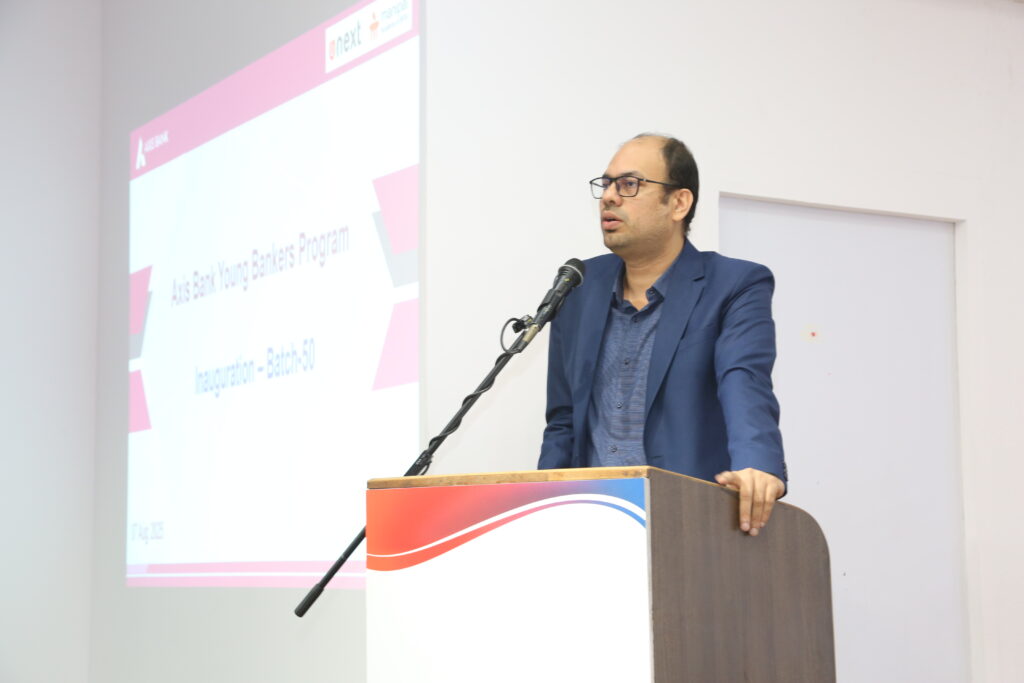
Adding to this discussion, Dr. Soumyadip Roy, Associate Professor and In-charge Director, UNext Manipal Academy of BFSI shares his expert view.
Talent Strategy in BFSI
How have RBI’s regulatory changes, especially on unsecured lending reconfigured the talent landscape across sales, collections, and frontline roles in BFSI?
RBI’s regulatory changes on unsecured lending in 2023 and more recently in 2025, have raised both capital cost and risk cost. The intention is to make lenders more careful, selective and efficient. For Sales roles, the stricter norms may lead to lower volumes of loans. Sales roles may require deeper understanding of underwriting and credit processes. These regulations would also impact collections of jobs, which will come under higher scrutiny. It may lead to higher adoption of tech, analytics and a need for familiarity with newer compliance rules. In frontline roles, I see a higher need for consultative selling rather than product push, primarily because the demand for unsecured loans may go down as firms transfer some of the higher costs to consumers.
In this climate of regulatory tightening, how can institutions better align talent acquisition with compliance-sensitive operations while maintaining agility?
Institutions affected by these regulatory changes should offer refresher training to frontline roles. In the face of more oversight and greater audits, the workforce needs to be aware of the most recent regulatory norms and incorporate them in their day-to-day operations. A fine balance between training needs and business targets needs to be achieved, without compromising on either.
Role Evolution
In what ways can academic institutions and BFSI organizations co-develop programs that prepare students for evolving roles in cybersecurity, analytics, EKYC, and collections?
Industry-academia partnerships can play a major role in preparing the workforce of tomorrow. The way to do this would be to make the curriculum aligned with industry needs by incorporating the latest regulatory requirements from RBI, SEBI or IRDA in cybersecurity protocols and analytics tools. Curriculum must incorporate simulations, case studies and a Capstone project, where learners can work on live projects. These could be on fraud detection, data breaches, compliance lapses on other challenges faced by BFSI firms. There are various certifications which can be embedded in the curriculum – such as NISM or IIBF certifications on AML/KYC compliance, digital fraud management, cybersecurity hygiene, and credit analytics etc.
The curriculum should undergo regular updates as regulations as well as industry needs evolve.
BFSI Hiring Trends
Entry-level salaries are losing appeal amid high attrition. What innovative compensation models or career incentives could BFSI firms adopt to enhance retention and engagement?
This has been a challenge faced by firms due to the competitive nature of the industry. While competition is good for efficient markets, it does pose a challenge for labor markets. Some innovative ways to look at compensation are the following:
- Fixed + variable pay on the performance of the portfolio. Variable pay can be tied to delinquency rates, regular payments and other parameters which signal better portfolio health. This achieves the twin target of incentivizing sales folks to emphasize health rather than just numbers while ensuring compliance with the stricter regulatory norms.
- Incentives for completing certifications on AML/KYC, credit risk, analytics tools etc
- To encourage teamwork, payment can be based on branch profitability, rather than individual targets.
Expansion
What role can non-metro educational hubs play in preparing students for opportunities in Tier-2 and Tier-3 BFSI roles?
To develop talent pipelines that blend local insights with digital-first competencies, the focus should be to source locally while using technology for screening. Campus drives in tier 2/3 cities, job fairs, guest lectures and awareness drives must be done physically. India is a diverse country with many languages, religions and cultures. While there is a paucity of good jobs and employment opportunities, firms often do not find readily available talent to hire. To solve this supply demand problem, proper screening using technology, local awareness drives and training provided by industry-academia curriculum is the way to go.
How do you foresee the evolution of frontline roles, with a focus on customer empathy, digital literacy, and local engagement, driving competitive differentiation in BFSI?
This is a good question. Ultimately, empathy-driven customer interactions will be the true competitive advantage. Frontline employees must emphasize meeting the needs of the customer, which can only be achieved via listening and understanding. Solutions provided must be customized to the needs of the customer. It is possible to do much of this using technology; however, tech alone cannot do this. At least not now or any time in the near future.
Building Future-Ready BFSI Workforce
How can MBA or finance programs evolve to better align with the needs of digital-first BFSI organizations?
The curriculum should be aligned with needs of today. Business school curriculum may be rich in theory and case studies, which are of course very important, but lack in being at the forefront of latest BFSI practices. One way is to have industry academia programs – where students are hired by banks, trained by business schools and deployed by the bank. Another way is to have industry personnel teach courses as professors of practice. It is very important to have access to training servers of the bank and/or access to latest case studies on challenges faced and overcome by financial institutions.
You may be interested to read this: MBA in Finance vs MBA in FinTech
What advice would you give to young management and finance professionals aiming to future-proof their careers in a rapidly digitizing industry?
Continuous learning is the only way forward. May recent changes brought about by evolution in technology is in its early stages – predicting which way it will take firms, consumers and the industry is difficult. Keeping up with latest developments will always keep an employee one step ahead.
Conclusion
While the current hiring slowdown in BFSI may feel discouraging, it’s more of a strategic pause than a long-term decline. The industry is recalibrating and shifting from mass recruitment to quality jobs and tech-enabled roles that demand new-age skills. With recovery expected from Q2 FY26 and a positive long-term outlook, this is the perfect time for aspiring professionals to invest in upskilling, embrace digital competencies, and prepare for a future where technology and finance go hand in hand. The opportunities ahead will favor those who adapt, innovate, and stay ahead of the curve.
Prepare for your next career milestone with us